Hello
Hello

Things I’ve built.
Full-stack platforms, developer tools, and side projects. Here’s some of what I’ve been working on.

Church
Hub
A DEVELOPER PLATFORM FOR CHURCHES
TO BUILD CUSTOM SOLUTIONS
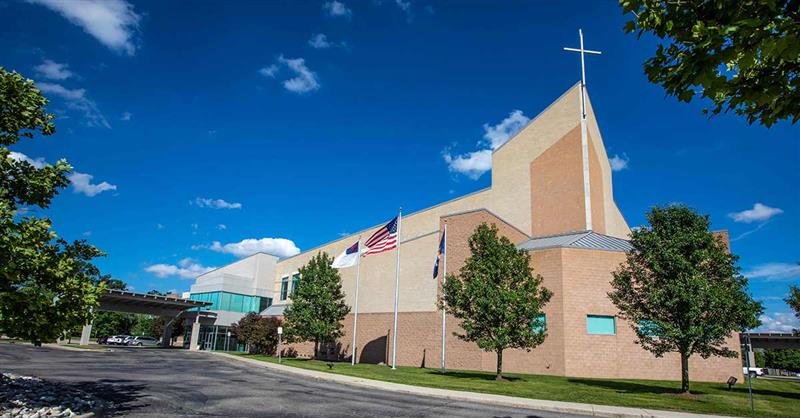
WOODSIDE
BIBLE CHURCH

Personal
Projects
THE STUFF I BUILD FOR FUN
AND SOMETIMES FOR FRIENDS & FAMILY
Church
Hub
A DEVELOPER PLATFORM FOR CHURCHES
TO BUILD CUSTOM SOLUTIONS
WOODSIDE
BIBLE CHURCH
Personal
Projects
THE STUFF I BUILD FOR FUN
AND SOMETIMES FOR FRIENDS & FAMILY
Church
Hub
A DEVELOPER PLATFORM FOR CHURCHES
TO BUILD CUSTOM SOLUTIONS
WOODSIDE
BIBLE CHURCH
Personal
Projects
THE STUFF I BUILD FOR FUN
AND SOMETIMES FOR FRIENDS & FAMILY
My Story.
The places and people that made me.
Sylvester
An Approach to Emotion Classification
The Idea
Sylvester was a collaborative research project I worked on during undergrad at the University of Detroit Mercy. It learned the language of Twitter through automatic annotation and classification, then interpreted tweets in real time to determine how people felt emotionally about any given subject, based on the current shape of online language rather than a fixed lexicon.
Why it Still Matters
I built AI before you could use AI to build code. That predates the entire vibe-coding era. Working on Sylvester meant wrestling with the messy reality of unstructured language at scale: tokenization, drift, sarcasm, slang, ambiguity. The instincts I developed then are the foundation of what’s now called context engineering.
AI’s capabilities have expanded faster than anything I’ve worked in, and I’ve watched every iteration from inside the work, not just as a user. If your team is trying to figure out where AI actually fits in your product, I’m the person who has been doing this since before it was easy.